How to Choose Sunscreen: SPF and PA Explained in 5 Minutes
Decode SPF and PA on sunscreen labels, choose the right formula for your skin and lifestyle, and learn how much to apply for real protection.
In tropical climates the UV Index stays high nearly all year, so sunscreen isn’t optional — it’s the single most important step for preventing premature ageing and pigmentation.
What is SPF?
SPF (Sun Protection Factor) measures protection against UVB, the rays that cause sunburn.
- SPF 30 blocks about 97% of UVB
- SPF 50 blocks about 98% of UVB
A higher number doesn’t mean one application lasts all day — reapplying is still essential.
What is PA?
PA (Protection Grade of UVA) indicates protection against UVA, which drives photo-ageing and melasma. More plus signs mean more protection; PA++++ is the highest.
How much to apply
The biggest mistake is applying too little. For face and neck, use about two finger-lengths, or roughly 1/4 teaspoon.
Applying half the recommended amount can reduce your real-world SPF to a fraction of what’s on the label.
Choose a texture for your skin
| Skin type | Recommended texture |
|---|---|
| Oily | Gel / matte fluid |
| Dry | Cream / lotion |
| Sensitive | Mineral (Zinc Oxide), fragrance-free |
Summary
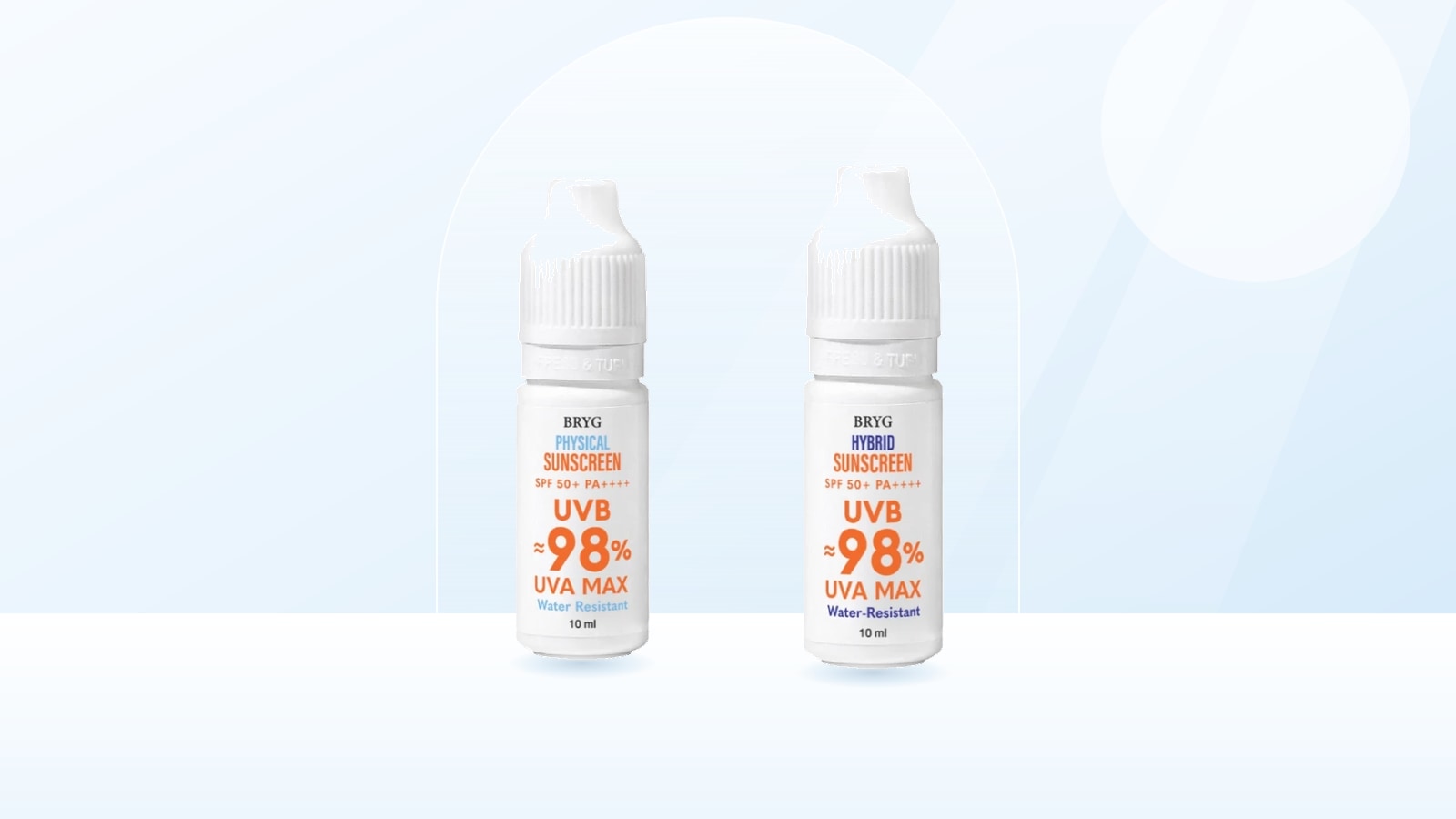
Choose SPF 30+ and PA+++ or higher, apply enough, reapply consistently, and pair it with a serum that suits your skin. BRYG Daily Shield SPF50+ PA++++ is a weightless fluid with no white cast, made for everyday wear in hot, humid weather.
Products mentioned in this article
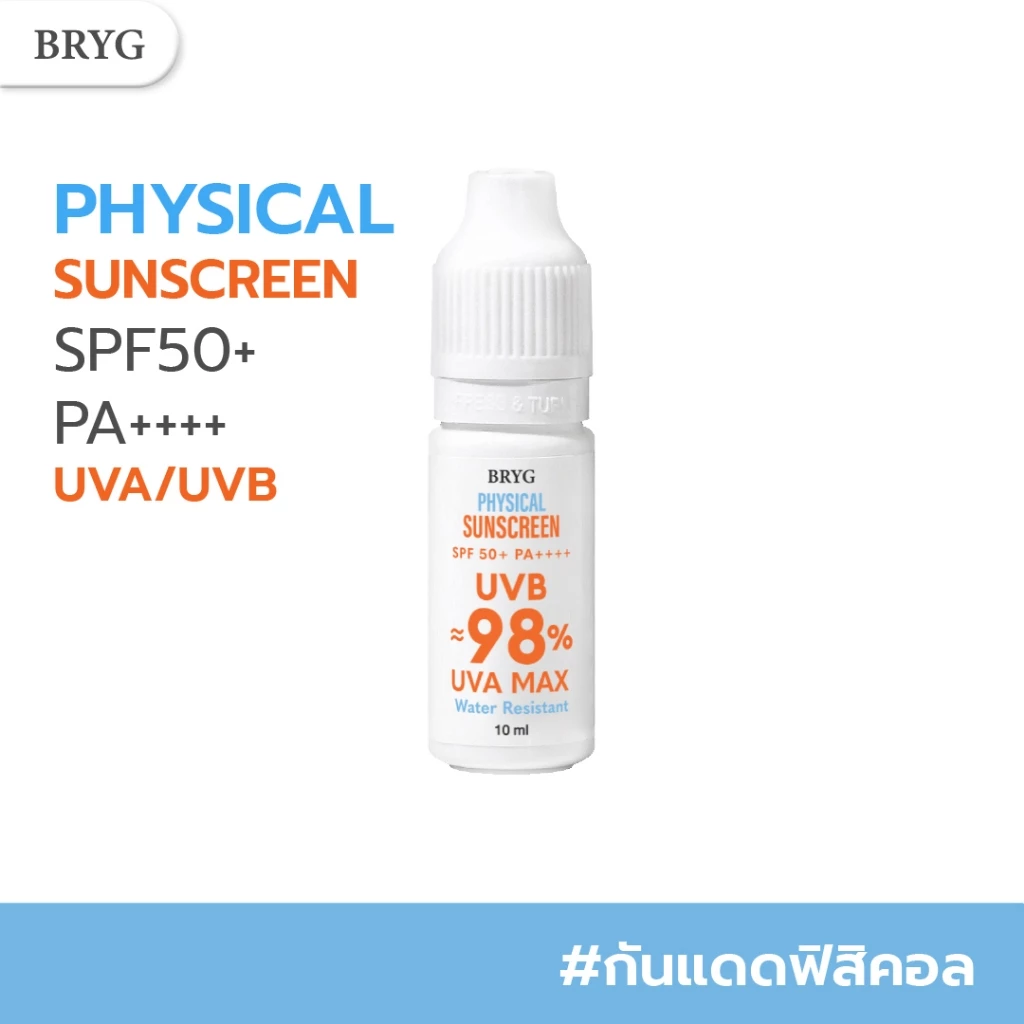
BRYG Physical Sunscreen SPF50+ PA++++
100% Physical fluid sunscreen SPF50+ PA++++ for sensitive skin · THB 49
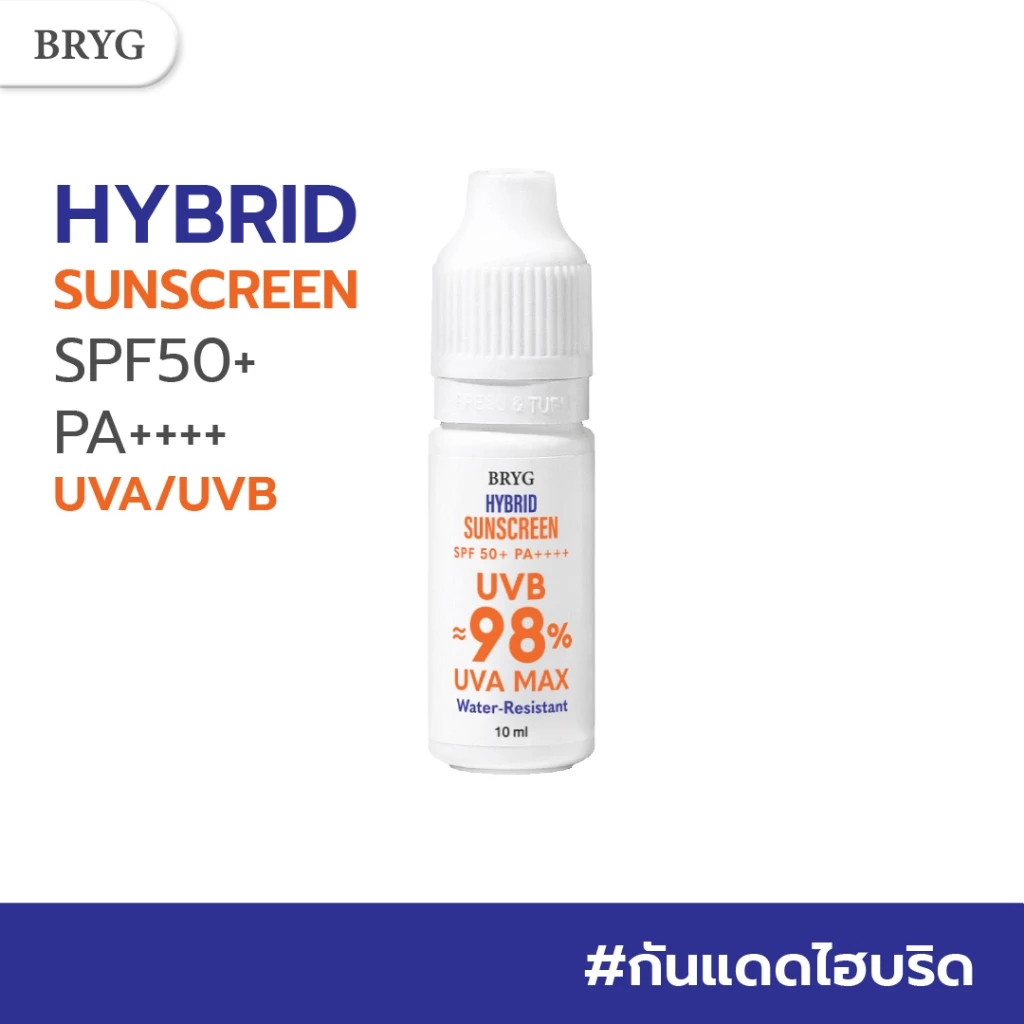
BRYG Hybrid Sunscreen SPF50+ PA++++
Weightless Hybrid fluid sunscreen SPF50+ PA++++, no white cast · THB 49
Frequently asked questions
Do I need sunscreen indoors?
Yes. UVA rays pass through windows, and visible light from screens can contribute to dullness.
How often should I reapply?
Every 2–3 hours outdoors, or immediately after heavy sweating or swimming.